Reading Time: 10–12 Minutes
Whether you’re ordering your first flight at a local brewery or discussing the latest hazy IPA release with fellow beer lovers, craft beer has a language all its own. From terms like IBU and dry-hopped to phrases such as tap takeover and bottle share, it’s easy to feel like everyone else got the handbook except you.
The good news? You don’t need to be a brewer or certified beer expert to talk craft beer with confidence.
Welcome to How to Talk Craft Beer: 40+ Craft Beer Terms Explained, our go-to guide to the craft beer terms every enthusiast should know. From understanding what’s written on a can label to navigating a Puerto Rican taproom menu, this article will help you order smarter, describe what you’re tasting, and discover new favorites along the way.
Whether you’re just beginning your craft beer journey or looking to sharpen your beer knowledge, this guide will help you speak the language of beer; one pint at a time.
Jump to a Section
- Beer Basics
- Brewing Process
- Beer Styles
- Tasting Vocabulary
- Serving & Culture
- Puerto Rico Craft Beer Culture
- Hop Cheat Sheet
How to Use This Guide
New to craft beer? Start with Beer Basics and Tasting Vocabulary to build a solid foundation.
Already a beer enthusiast? Jump ahead to The Brewing Process, Popular Hop Varieties, and Puerto Rico Craft Beer Culture to deepen your beer knowledge.
No matter where you are on your craft beer journey, this guide is designed to be both a quick reference and a resource you’ll return to again and again.
1. Beer Basics: Understanding the Numbers
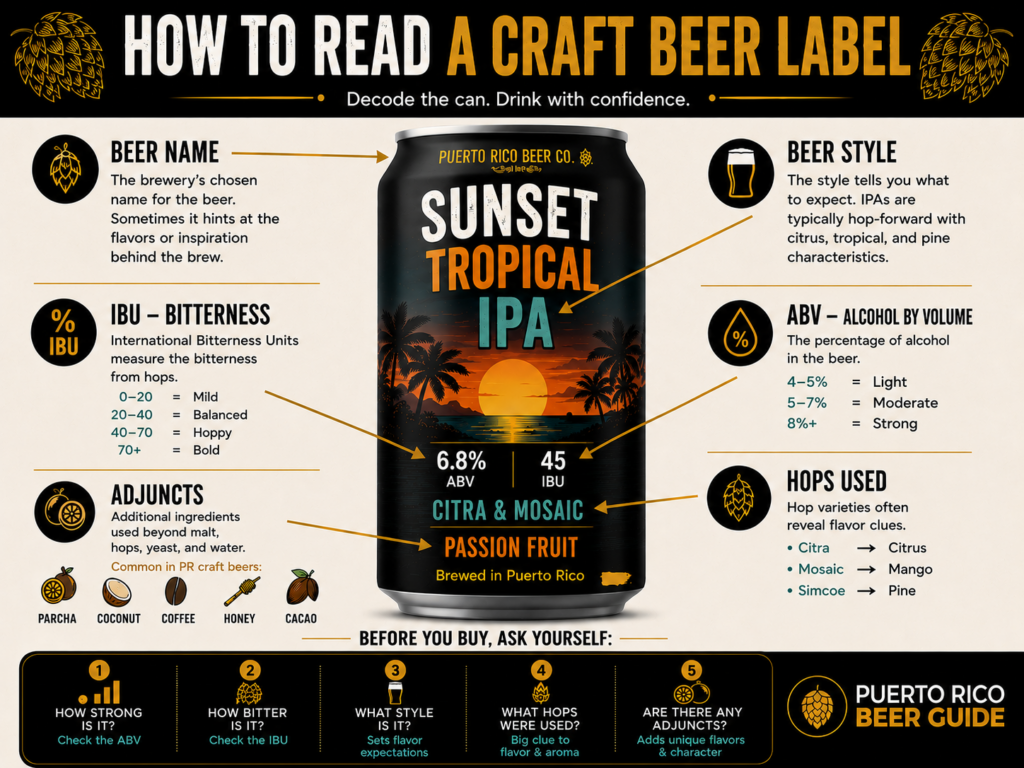
Before diving into hop varieties, brewing techniques, and tasting descriptors, it helps to understand the numbers and technical terms that appear on nearly every beer label and tap list. These fundamentals provide valuable clues about a beer’s strength, bitterness, appearance, and overall character.
ABV (Alcohol by Volume)
ABV refers to the percentage of alcohol contained in a beer. It’s one of the first things many beer drinkers notice on a label because it provides a quick indication of how strong a beer might be.
Typical ABV Ranges
- Light Lager: 4–5%
- Pale Ale: 5–6%
- IPA: 6–7.5%
- Double IPA: 8–10%
- Imperial Stout: 9–14%+
Why it matters: Higher ABV beers often deliver fuller flavors and greater intensity, while lower ABV options tend to be lighter and more sessionable.
IBU (International Bitterness Units)
IBU measures the bitterness contributed primarily by hops during the brewing process.
General IBU Guide
- 0–20 IBU: Low bitterness
- 20–40 IBU: Balanced bitterness
- 40–70 IBU: Noticeably hop-forward
- 70+ IBU: Intensely bitter
Why it matters: A high IBU doesn’t always mean a beer tastes bitter. Malt sweetness and juicy hop flavors can soften perceived bitterness
SRM (Standard Reference Method)
SRM is the scale brewers use to describe a beer’s color.
SRM Color Examples
- 2–4 SRM: Pale lagers and pilsners
- 5–9 SRM: Golden ales and wheat beers
- 10–15 SRM: Amber ales and Märzens
- 20–30 SRM: Brown ales and porters
- 30+ SRM: Stouts and other dark styles
Why it matters: Color can offer clues about flavor expectations, although darker doesn’t always mean heavier.
Craft Brewery
Generally considered a small, independent brewery focused on quality, innovation, and flavor-driven beer.
Why it matters: Supporting craft breweries means supporting local businesses, passionate brewers, and thriving beer communities.
Adjunct
Ingredients added beyond beer’s core components of water, malt, hops, and yeast.
In Puerto Rico’s dynamic brewing scene, local brewers frequently leverage tropical adjuncts like parcha (passion fruit), mango, local specialty coffee, toasted coconut, honey, and cacao nibs to craft distinct regional profiles.
Why it matters: Adjuncts can dramatically influence a beer’s aroma, flavor, texture, and overall drinking experience.
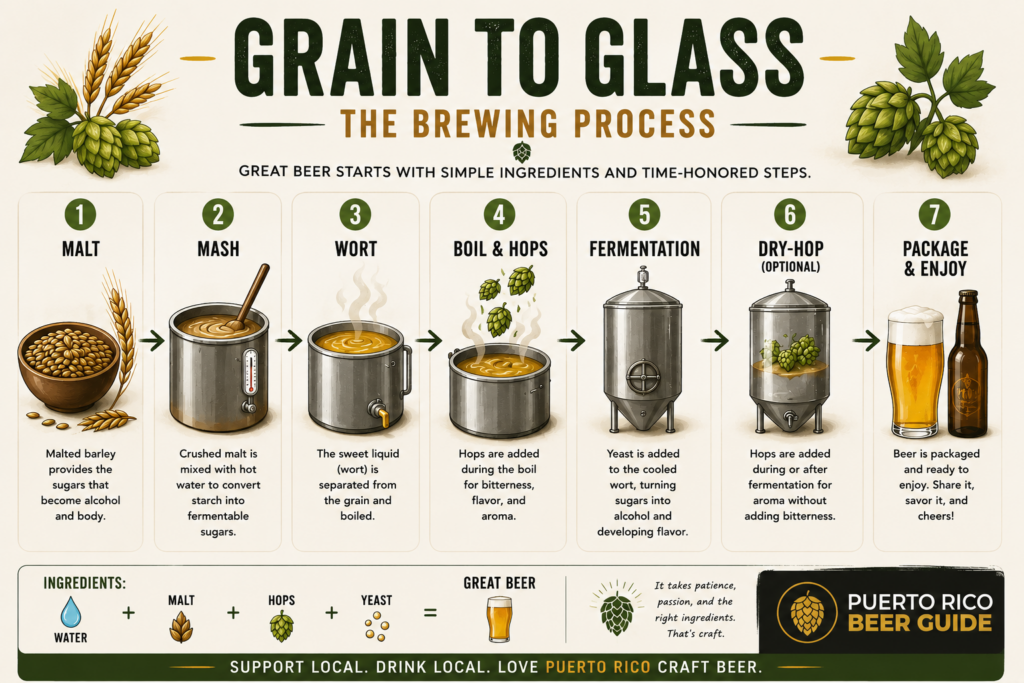
2. The Brewing Process
Understanding how these foundational ingredients transform into beer helps you appreciate the craftsmanship behind every pour.
Mash
The process of mixing crushed grains with hot water to convert starches into fermentable sugars.
Wort
The sweet, unfermented liquid extracted from the mash. Think of it as “pre-beer” before yeast is introduced.
Fermentation
The stage where yeast consumes sugars and converts them into alcohol and carbon dioxide. This is where beer truly becomes beer.
Dry-Hopping
Adding hops after boiling, during fermentation or conditioning—to maximize aroma and flavor without significantly increasing bitterness.
Expect notes of:
- Citrus
- Tropical fruit
- Pine
- Floral character
Barrel-Aged
Beer matured in previously used barrels such as bourbon, rum, whiskey, tequila, or wine barrels.
These barrels can contribute flavors of:
- Vanilla
- Oak
- Caramel
- Coconut
- Spice
Bottle Conditioning
A traditional method where beer undergoes a second fermentation inside the bottle, creating natural carbonation and additional complexity.
Unfiltered
Beer packaged without filtration. It often retains a hazy appearance while delivering fuller flavor and mouthfeel.
3. Core Beer Styles
While there are dozens of sub-styles, most beers belong to one of two major families based on the yeast used during fermentation.
The Lager Family
Fermented at cooler temperatures using bottom-fermenting yeast, lagers are celebrated for their clean, crisp character.
In Puerto Rico’s tropical climate, they’re often the perfect companion to a hot afternoon.
Pilsner
A historic pale lager known for its crisp finish and balanced floral hop character.
The Ale Family
Fermented at warmer temperatures using top-fermenting yeast, ales often showcase fruity and complex flavors.
Ale
The broad family that includes pale ales, IPAs, porters, and stouts.
Saison
A Belgian farmhouse ale known for fruity aromas, spicy yeast notes, and refreshing dryness.
Stout
Dark ales featuring roasted malts that produce flavors reminiscent of espresso, dark chocolate, and toasted bread.
The IPA Spectrum
India Pale Ales remain the driving force behind modern craft beer.
IPA (India Pale Ale)
Known for:
- Hop-forward flavor
- Citrus aromas
- Tropical fruit notes
- Piney bitterness
New England IPA (NEIPA)
A hazy variation featuring:
- Juicy fruit flavors
- Soft mouthfeel
- Low perceived bitterness
Double / Imperial IPA
A stronger version of the IPA with elevated alcohol levels and intense hop expression.
Session Beer
Any style designed with a lower ABV, typically under 5%, making it easy to enjoy over an extended period.
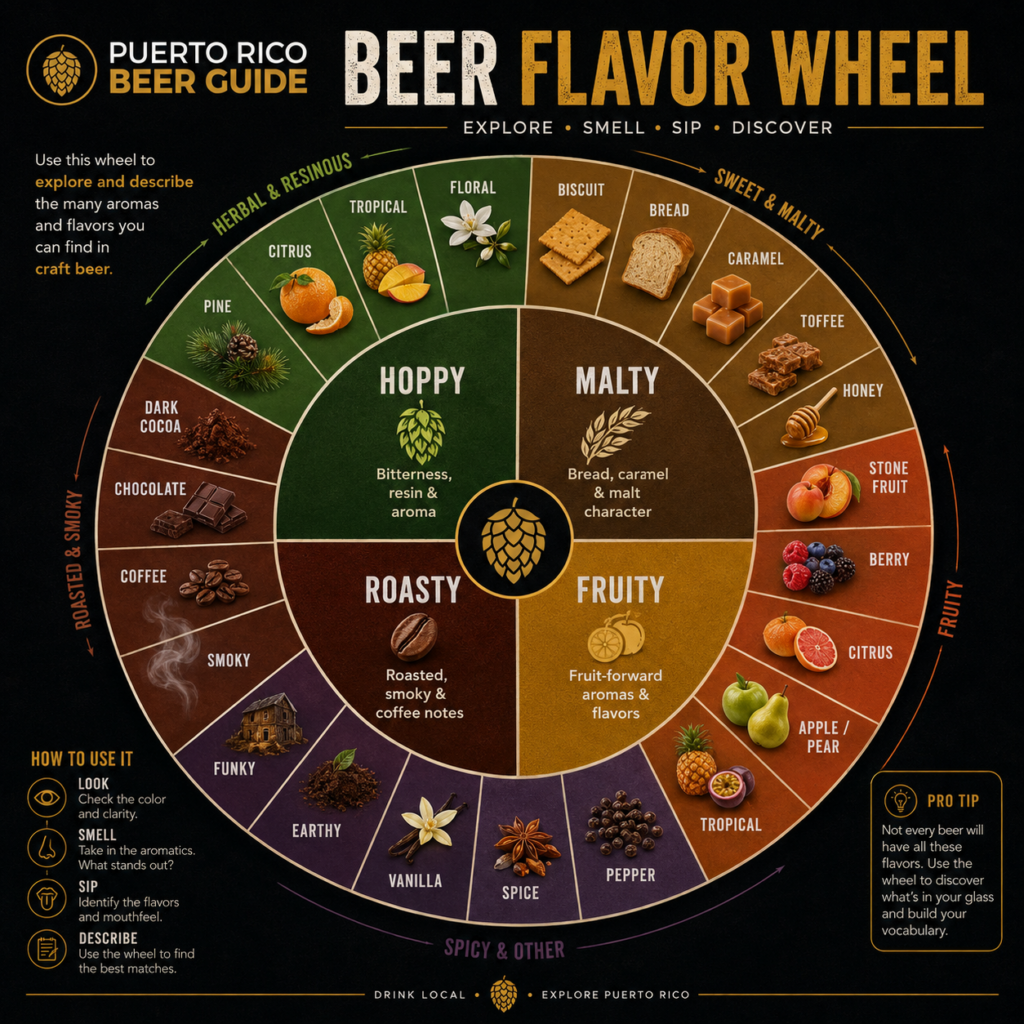
4. Tasting & Sensory Vocabulary
These are the terms you’ll hear in taprooms, read in beer reviews, and use to describe your own tasting experiences.
Aroma
The scents detected before taking a sip.
Examples include:
- Mango
- Pineapple
- Citrus zest
- Fresh-cut pine
- Vanilla
Body
The perceived weight and density of beer in your mouth.
- Light-bodied
- Medium-bodied
- Full-bodied
Mouthfeel
The texture and physical sensation of beer on the palate.
Descriptors include:
- Creamy
- Silky
- Crisp
- Smooth
- Effervescent
Finish
The flavors and sensations that linger after swallowing.
A finish may be:
- Dry
- Clean
- Lingering
- Sweet
- Bitter
Common Flavor Descriptors
Crisp
A clean, refreshing quality often associated with lagers and pilsners.
Juicy
Bright flavors reminiscent of fresh tropical fruit juice.
Dank
Pungent aromas suggesting resinous, herbal, or cannabis-like qualities.
Resinous
Flavors resembling sticky pine sap and evergreen forests.
Funky
Earthy, rustic characteristics associated with wild yeast strains such as Brettanomyces.
Roasty
Dark flavors reminiscent of cocoa, espresso, and toasted bread.
5. Ordering, Serving & Industry Culture
Understanding how beer is served—and the culture surrounding it—helps you navigate any taproom with confidence.
Draft Beer
Beer served fresh from a keg through a tap system.
Taproom
A brewery’s on site hospitality space where visitors can enjoy fresh pours, limited releases, and community events.
Flight
A selection of small pours that allows you to sample multiple beers at once.
Perfect for exploring a brewery’s lineup.
Growler & Crowler
Growler
A reusable 64-ounce container used to transport draft beer home.
Crowler
A 32-ounce aluminum can filled and sealed directly from the tap.
Nitro
Beer infused with nitrogen rather than carbon dioxide.
Nitro beers feature:
- Creamier mouthfeel
- Tiny cascading bubbles
- Dense foam heads
Vertical Tasting
Sampling multiple vintages of the same beer side by side to explore how flavors evolve over time.
Puerto Rico Craft Beer Culture
Puerto Rico’s beer scene has developed its own traditions and terminology.
Collaboration Brew
A limited-run beer created by two or more breweries working together. These releases celebrate creativity and community.
Limited or Festival Release
Small-batch beers brewed specifically for anniversaries, festivals, or seasonal celebrations.
When they’re gone, they’re gone.
Beer Launch Party
Events celebrating the debut of a new beer release.
These gatherings often feature:
- Meet-the-brewer opportunities
- Specialty pours
- Food vendors
- Live music
Tap Takeover
When a brewery temporarily features multiple beers on tap at a bar or restaurant.
Taproom Release
Small-batch beers available exclusively at the brewery. These limited offerings often reward those willing to visit in person.
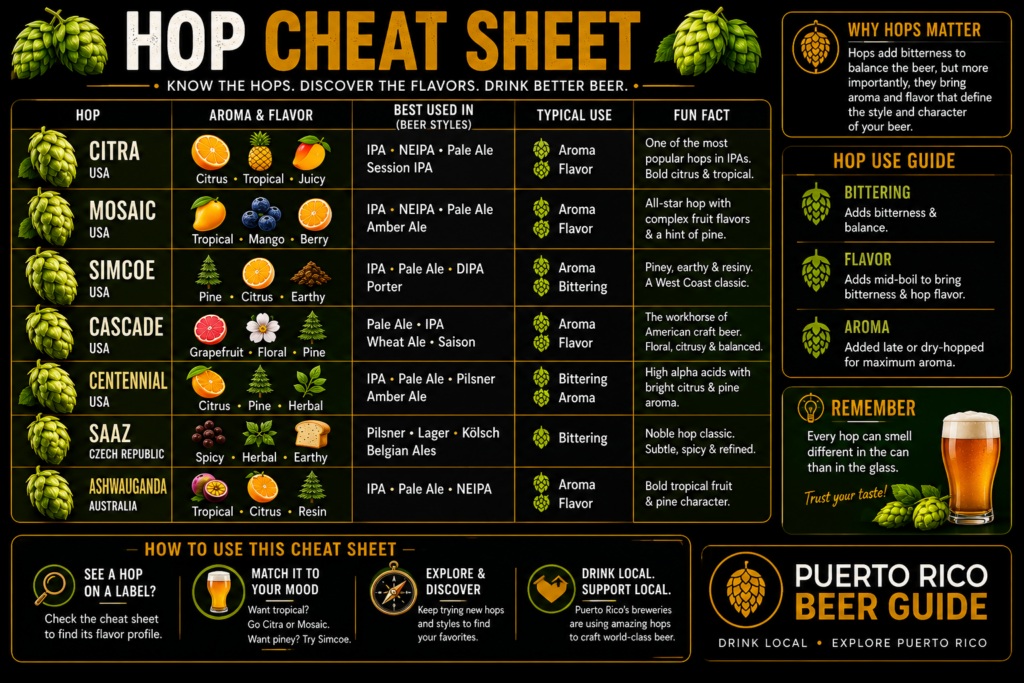
6. Popular Hop Varieties to Recognize
Hops are often described as the spice rack of modern brewing. These are some of the varieties you’ll frequently encounter on Puerto Rican tap lists and can labels.
Citra
Explosive citrus zest, grapefruit, and tropical fruit.
Mosaic
Blueberry, mango, citrus, and subtle earthy pine.
Simcoe
Pine sap, passion fruit, and herbal complexity.
Nelson Sauvin
White grape and gooseberry characteristics reminiscent of Sauvignon Blanc.
Nectaron
Ripe peach, pineapple, and passion fruit.
Motueka
Bright lime zest and tropical citrus.
Riwaka
Powerful grapefruit and passion fruit aromatics.
Galaxy
Intense passion fruit, peach, and tropical fruit character.
Drink With Confidence
Craft beer is more than what’s in the glass, it’s a story of ingredients, creativity, and community. The more you understand its language, the more rewarding every pint becomes.
You’ll recognize the styles that align with your preferences, decode what brewers are highlighting on their labels, and order with confidence whether you’re visiting a neighborhood taproom or exploring Puerto Rico’s newest brewery.
So the next time you pull up a stool and raise a freshly poured pint, you’ll know exactly what to expect before that first sip.
¡Salud!, Cheers
Quick Reference Index
Beer Basics
ABV • IBU • SRM • Adjunct • Craft Brewery
Brewing
Mash • Wort • Fermentation • Dry-Hopping • Barrel-Aged • Bottle Conditioning • Unfiltered
Styles
Lager • Ale • IPA • NEIPA • Double IPA • Pilsner • Saison • Stout • Session Beer
Tasting
Aroma • Body • Mouthfeel • Finish • Crisp • Juicy • Dank • Resinous • Funky • Roasty
Serving & Culture
Draft • Flight • Growler • Crowler • Nitro • Taproom • Vertical Tasting • Collaboration Brew • Festival Release • Beer Launch Party • Tap Takeover • Bottle Share • Taproom Release
Hop Varieties
Citra • Mosaic • Simcoe • Nelson Sauvin • Nectaron • Motueka • Riwaka • Galaxy